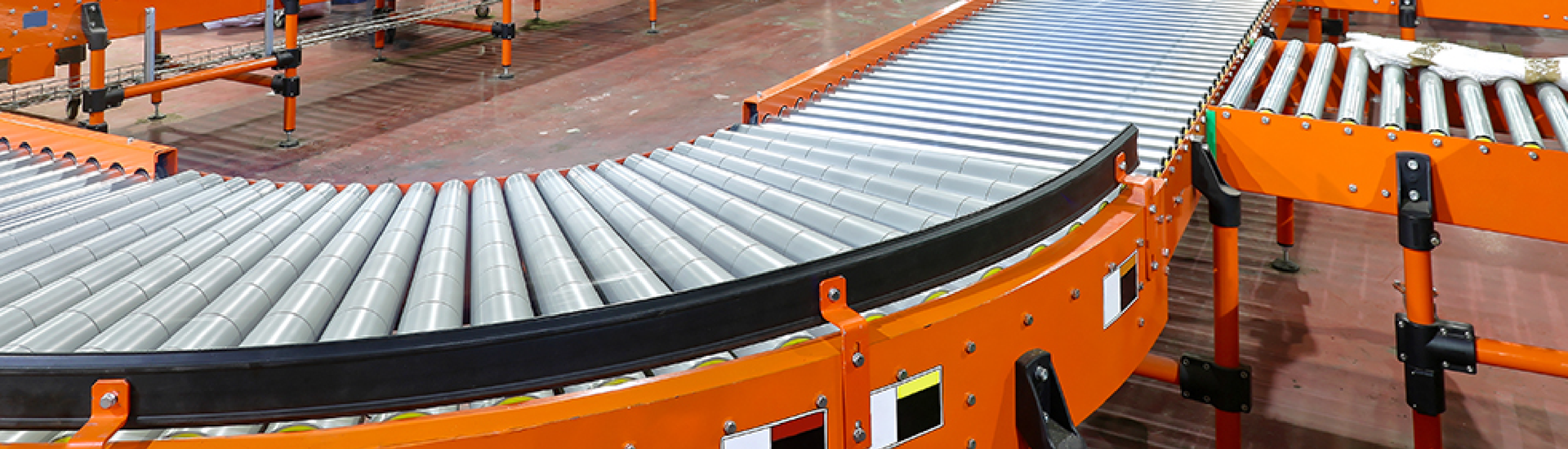
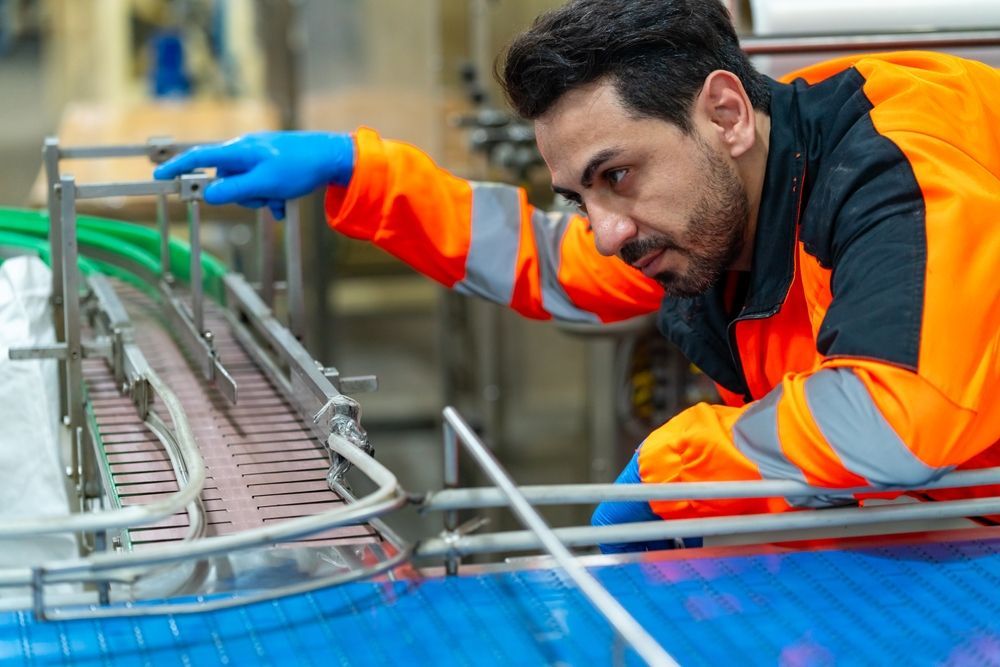
Standard vs Custom Conveyors: Why Engineered Solutions Win
Industrial Kinetics
June 29, 2026
Choosing between a standard conveyor and a custom conveyor system affects more than equipment cost. Conveyor design impacts throughput, accumulation behavior, automation integration, maintenance access, and long-term operational reliability.
Standard conveyors work well in predictable applications with straightforward layouts. Custom conveyor systems are engineered around specific operating conditions, including load characteristics, duty cycle, environmental factors, and automation requirements.
Key Takeaways
- Standard conveyors are catalog-configured systems built around defined operating envelopes for load, speed, duty cycle, and layout.
- Custom conveyor systems are engineered around throughput, load handling, and automation requirements.
- Conveyor selection affects uptime, maintenance, and long-term operating cost.
- Operations that exceed the catalog envelope — in load, duty cycle, automation complexity, or layout — are candidates for engineered-to-order conveyor systems.
Why Conveyor Selection Impacts More Than Initial Purchase Cost
Conveyor selection affects the long-term performance of the entire material handling process, not only the upfront equipment cost.
A conveyor system influences throughput, accumulation behavior, maintenance requirements, controls integration, and how reliably products move between operations. Two conveyors with similar purchase prices can perform very differently once they are placed into production.
For example, a conveyor that is not designed for the actual load characteristics or duty cycle may experience premature wear, unstable transfers, or inconsistent accumulation. In automated facilities, poor conveyor integration can also create communication problems between the conveyor PLC control system, robotic cells, palletizers, or
Automated Storage and Retrieval Systems (ASRS).
Initial equipment cost is only one part of the decision. Installation labor, downtime risk, maintenance access, replacement components, energy consumption, and future expansion capability all contribute to the total lifecycle cost of the system.
The conveyor must match how the operation actually runs, not only the available budget at the time of purchase.
What Is a Standard Conveyor System?
A standard conveyor system is a pre-engineered, catalog-configured conveyor built around defined operating envelopes for load, speed, duty cycle, and layout. Within those envelopes, standard conveyors handle a wide range of industrial applications reliably. The distinction from a custom system is not capability — it's whether the conveyor is selected from established configurations or engineered around the specific operating profile of the application.
These systems use established frame designs, drive packages, and control configurations that can be applied across many facilities with limited modification. Standard conveyors are built around defined load envelopes, speed ranges, and duty cycles — and within those parameters, they perform reliably across a broad range of industrial applications.
Because the engineering parameters are already defined, standard conveyor systems can reduce lead times and lower initial costs. The distinction from a custom system is not capability — it's whether the application fits within the conveyor's established operating envelope.
How Standard Conveyors Are Typically Designed
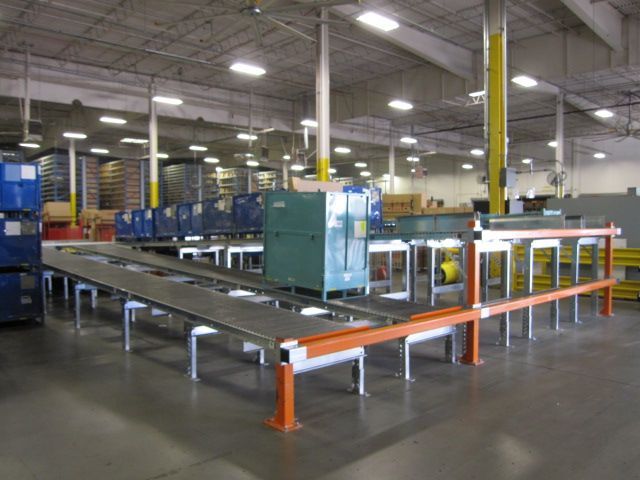
Standard conveyor systems are designed around a predefined set of operating assumptions. Manufacturers establish fixed parameters for load capacity, conveyor width, roller spacing, drive configuration, and controls architecture based on common material handling applications.
These systems are modular. Conveyor sections, supports, drives, and accessories can be combined in different layouts without requiring substantial engineering changes. This approach works well when products, pallet conditions, throughput rates, and environmental conditions fall within expected ranges.
The design process focuses on configuring existing components rather than developing application-specific engineering around the system. As a result, standard conveyors deliver reliable performance across a broad range of applications — provided the application fits within the system's defined operating envelope.
Common Applications for Standard Conveyors
Standard conveyor systems are commonly used across a broad range of industrial facilities — wherever the application falls within the conveyor's defined load capacity, speed range, and layout parameters.
Typical applications include carton transport, case handling, assembly lines, packaging operations, and basic pallet movement between defined process points. In these environments, products move through defined paths with consistent weight, dimensions, and accumulation characteristics — conditions that fall comfortably within a standard conveyor's operating envelope.
They are also frequently used in distribution and warehouse operations where layouts rely on standard conveyor modules and minimal custom integration. When the application fits within the conveyor's defined operating envelope, standard conveyors provide stable, repeatable material handling performance — without the lead time or cost of application-specific engineering.
Advantages of Standard Conveyor Systems
Standard conveyor systems offer real advantages when the application fits within the system's established operating envelope.
Because the design is already established, these systems require less engineering time and can be manufactured and installed more quickly than a custom conveyor system. Standardized components may also simplify spare parts management and reduce upfront equipment costs.
In operations where load sizes, duty cycles, and layouts fall within the conveyor's catalog parameters, standard conveyors provide reliable material handling performance without the cost of application-specific engineering.
For facilities whose accumulation logic, automation interfaces, and transfer requirements fall within what catalog configurations support, a standard conveyor is often the most practical approach from both a cost and implementation standpoint.
Operational Limitations of Standard Conveyors
The limitations of a standard conveyor system usually appear when the application moves outside the operating conditions the equipment was originally designed to handle.
When loads, duty cycles, routing requirements, or automation interfaces exceed what the catalog configuration is rated for, performance issues emerge that are difficult to resolve by modifying a pre-engineered system. In these environments, facilities may experience unstable transfers, inconsistent accumulation, premature component wear, or limited controls integration.
Standard systems can also become restrictive when layouts require non-standard elevations, tight footprints, specialized transfers, or future expansion flexibility. Modifying a pre-engineered conveyor after installation may increase both engineering complexity and total landed cost.
These limitations do not make standard conveyors ineffective.
What Is a Custom Conveyor System?
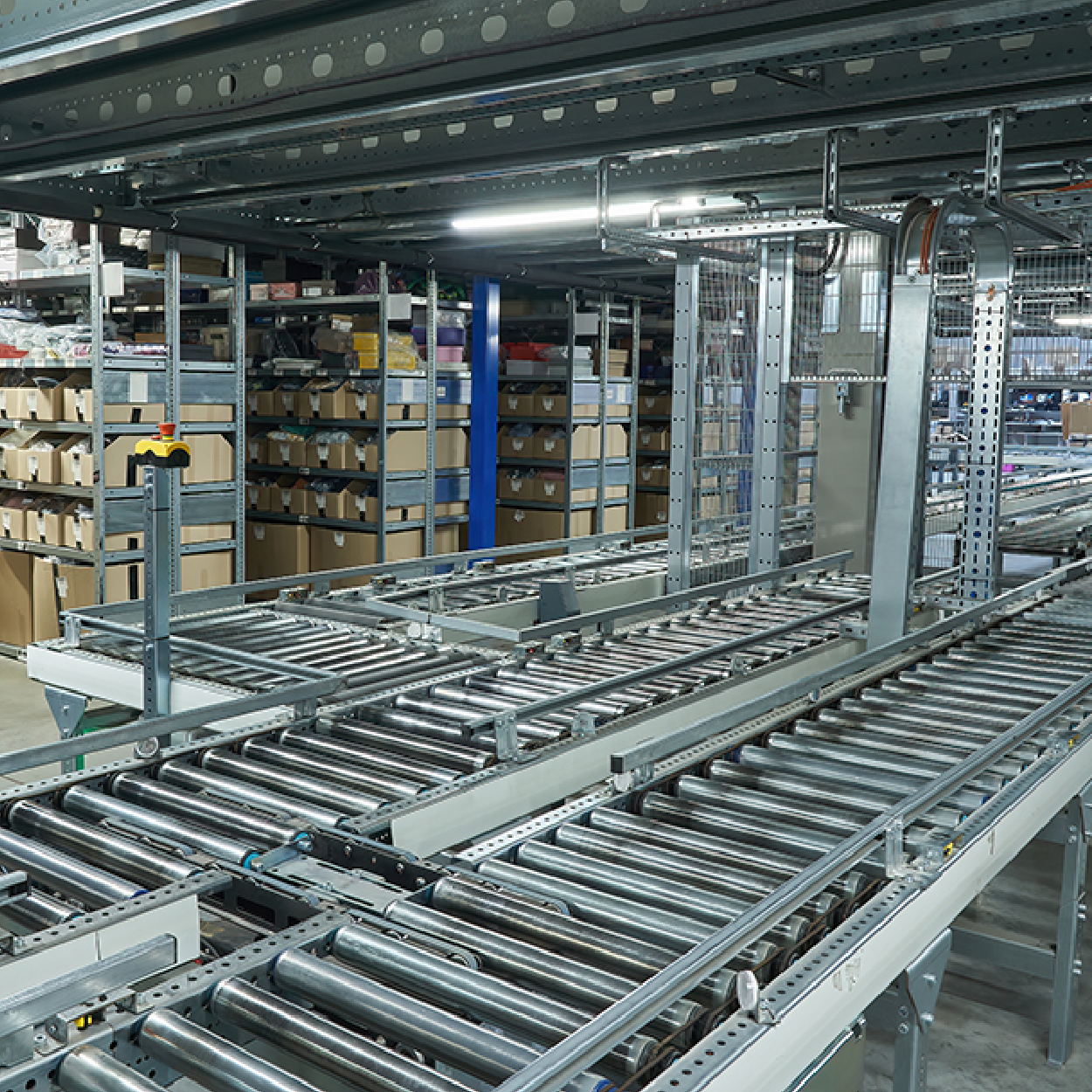
A custom conveyor system is an engineered conveyor solution designed around the specific operating requirements of an application.
Unlike standard conveyors, custom systems are developed based on factors such as load characteristics, throughput requirements, accumulation behavior, environmental conditions, and automation interfaces. The conveyor layout, frame construction, controls architecture, and transfer methods are all evaluated as part of the broader material handling process.
Custom conveyor systems are commonly used in facilities where standard equipment cannot reliably support the operational demands of the application. Common applications include heavy pallet handling, automated production environments, complex routing, and facilities with unique space or integration constraints.
Defining Application-Specific Engineering
Application-specific engineering focuses on designing the conveyor around the physical and operational demands of the process.
This includes evaluating factors such as load weight, pallet condition, conveyor speed, accumulation behavior, duty cycle, transfer requirements, and available floor space. Environmental conditions such as washdown, freezer service, debris, or continuous operation also affect component selection and system layout.
Engineering decisions are made based on how the conveyor will perform over time inside the actual production environment. That may involve selecting a specific conveyor type, adjusting roller spacing, designing controlled accumulation zones, or integrating the conveyor PLC control system with upstream and downstream automation equipment.
Typical Components of a Custom Conveyor Solution
Custom conveyor systems are built from a combination of mechanical, structural, and controls components selected for the specific application.
Depending on the operating requirements, a system may include
Chain Driven Live Roller (CDLR) conveyors, multi-strand chain conveyors, transfer cars, lift stations, turntables, accumulation zones, or specialized transfer devices. Drive sizing, frame construction, roller spacing, and chain selection are all determined by the load characteristics and duty cycle of the system.
The controls architecture is also part of the engineering process. Custom systems often include photoelectric sensors, zone accumulation control, conveyor PLC control systems, and interfaces with upstream or downstream automation equipment.
In many facilities, the conveyor is only one part of a larger automated process. Custom engineering helps ensure that the individual components function together as a coordinated material handling system.
Where Custom Conveyors Are Commonly Used
Custom conveyor systems are used in operations where material flow requirements exceed the capabilities of standard conveyor layouts.
This includes heavy pallet handling, automated manufacturing environments, distribution centers, food production facilities, and applications with complex routing or accumulation requirements. Facilities integrating conveyors with
robotic cells, palletizers, stretch wrappers, Automated Guided Vehicles (AGVs), or Automated Storage and Retrieval Systems (ASRS) also rely on application-specific conveyor engineering.
Custom systems are particularly valuable when operations involve:
- Mixed pallet or product sizes
- Continuous-duty operation
- Tight floor space constraints
- Controlled accumulation and precision positioning
- Harsh environments, such as washdown or freezer service
- Future expansion or phased automation integration
The Engineering Differences Between Standard and Custom Conveyors
The primary difference between standard and custom conveyor systems is how the equipment is engineered around the application.
Standard conveyors are designed around predefined operating assumptions. Custom conveyor systems are engineered based on the actual load characteristics, throughput requirements, accumulation behavior, controls integration, and environmental conditions of the facility.
Load Handling and Duty Cycle Design
Load handling is where the engineering difference between a catalog system and an engineered-to-order system becomes most concrete.
On a standard conveyor, the load capacity, roller bearing specification, chain pitch, and frame section size are fixed by the catalog configuration. A plant engineer selecting from that catalog is accepting a predefined set of design assumptions — that load will fall within the rated envelope, that duty cycle will stay within the published hours-per-day range, and that accumulation back-pressure won’t exceed what the drive and strand were sized to handle. For applications that fit those assumptions, the standard system performs reliably. The design has already been validated across many installations.
On an engineered-to-order system, those same decisions are made against the actual load profile of the application. Chain pitch is selected based on calculated strand pull at the actual conveyor length, incline, and gross load — not a catalog default. Roller bearing type and load rating are matched to the specific pallet weight and cycle frequency, with bearing life calculated at the operating load rather than assumed. Frame section size and cross-member spacing are sized for the actual deflection limits under distributed load across the full conveyor length. Drive sizing works back from the required pull — accounting for loaded starts, inclines, and accumulation conditions — through gear ratio and motor selection, rather than defaulting to the nearest standard package. In accumulation zones, back-pressure is calculated based on line length, zone configuration, and product weight to confirm that the drive train and strand can sustain the holding load without accelerated wear. The result is a system engineered to the actual load profile rather than an assumed envelope, which directly affects component service life and unplanned downtime risk.
Conveyor Controls and Automation Integration
Automation integration affects how reliably material moves between conveyor sections and connected equipment.
Standard conveyors are configured for basic transport with limited controls coordination and are designed around broad service assumptions. More complex operations may require communication between the conveyor PLC control system, robotic work cells, palletizers, stretch wrappers, Automated Guided Vehicles (AGVs), and Automated Storage and Retrieval Systems (ASRS).
Custom conveyor systems are designed to support controlled accumulation, equipment timing, and repeatable product positioning throughout the process. These capabilities become increasingly important in facilities where throughput and system coordination directly affect production performance. Industrial Kinetics works flexibly with integrator-led controls architectures, supporting standard industrial protocols and clear demarcation at the controls boundary. Where the integrator owns the broader system PLC, IKI can deliver the conveyor with its own on-board controls — handling zone logic, accumulation sequencing, and safety I/O — and hand off at a defined network interface. Supported protocols include EtherNet/IP, Profinet, and Modbus TCP, allowing the conveyor subsystem to communicate with upstream and downstream automation equipment without requiring the integrator to rework their controls architecture around it. Where the integrator prefers to own controls down to the conveyor level, IKI can supply mechanical and electrical packages that fit within that model. The goal in either case is a clean demarcation: the integrator knows exactly where IKI’s scope ends and theirs begins, and the interface between the two is documented and testable before installation.
Transfer Design and Product Stability
Product stability becomes increasingly important at conveyor transfer points.
Standard conveyors use predefined transfer methods suited for loads that fall within catalog parameters. Heavy pallets, unstable products, or complex routing can create alignment issues or inconsistent movement between conveyor sections.
Custom conveyor systems account for product orientation, conveyor elevation, accumulation behavior, and transfer spacing to support more controlled material flow.
This is especially important in automated operations where repeatable positioning affects downstream equipment performance.
Maintainability and Service Access
Maintenance demands increase as conveyor systems operate longer hours and handle more complex processes.
Standard conveyors are designed around broad service assumptions. In tight layouts or automation-heavy environments, accessing drives, bearings, sensors, or controls components may become difficult after installation.
Custom conveyor systems can be engineered around the actual facility layout and maintenance requirements. Component placement, removable guarding, and service clearances are planned to improve access during inspections, repairs, and replacement work.
Evaluating Total Lifecycle Cost Instead of Initial Price
Initial conveyor cost is only one part of the long-term investment.
Maintenance labor, replacement components, downtime risk, energy consumption, and future system modifications all contribute to total lifecycle cost over time. A lower-cost conveyor may require more frequent maintenance, create operational bottlenecks, or limit future automation integration as production demands change.
Custom conveyor systems involve more upfront engineering, but they reduce operational disruption by aligning the equipment with the actual requirements of the facility. Factors such as maintainability, controlled accumulation, component durability, and automation compatibility can significantly affect long-term operating costs.
For many facilities, the most economical conveyor system over its service life is not always the one with the lowest initial purchase price.
How Industrial Kinetics Approaches Custom Conveyor Engineering
Industrial Kinetics approaches conveyor design as an application engineering process, not a catalog equipment selection process.
Each system is developed around the operating requirements of the facility, including load characteristics, throughput targets, accumulation behavior, environmental conditions, and automation interfaces. Conveyor type selection, controls integration, transfer methods, and service access are evaluated together as part of the overall material handling system.
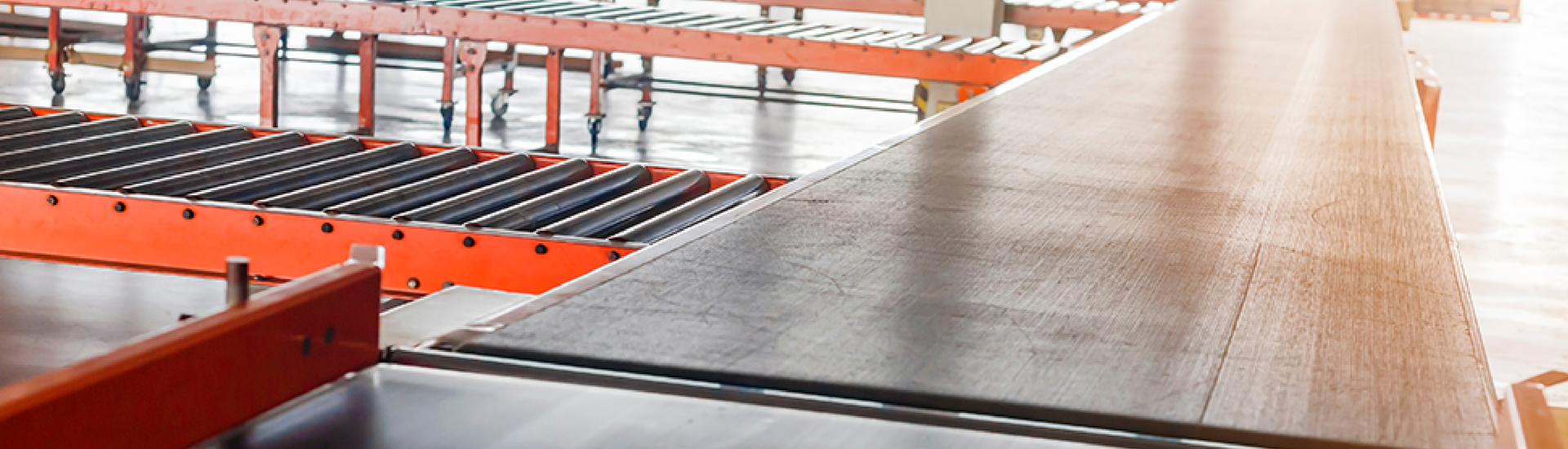
Industrial Kinetics designs and manufactures engineered conveyor systems for heavy-duty and automation-intensive environments, including Chain Driven Live Roller (CDLR) systems, multi-strand chain conveyors, transfer cars, overhead conveyor systems, and custom pallet conveyor systems.
Engineering, fabrication, and assembly are handled internally, allowing direct coordination from system design through commissioning and long-term support.
When a Standard Conveyor Is Still the Right Choice
Standard conveyor systems remain a practical choice for operations with straightforward routing, moderate throughput, and limited automation requirements.
In these environments, standard conveyors can reduce lead times, simplify implementation, and lower initial equipment costs. The key is matching the conveyor design to the actual operating conditions of the facility.
For applications involving heavier loads, automation integration, or more complex material flow requirements,
contact Industrial Kinetics to speak with an engineer or request a quote.
Our Recent Insights